

How Entrepreneurial Parents Can Build a Business and Get the Word Out to the Right People
Why Building a Business Is Not the Same as Getting the Word Out
I do not know about you, but starting a business and keeping it going takes a lot of energy. You have to keep on showingup for your audience, even when you are not compensated for it, keep believing in yourself even when you don’t, keep learning from your mistakes , a blog that no one reads , a video that has no views, a product that no one wants , the list is endless. In my many years along the entrepreneurial journey, I have come to learn that as an entrepreneurial parent, you must have confidence and that confidence is something that you practice and practice. You also have to have your values; these are like your northern star, they keep you on track and help you make decisions that are aligned with you, and finally, you have to solve a problem or give a solution. Your business exists to serve others.
I have in the past written about humility and empathy as traits I think are important for your business and for you as a person.
Many entrepreneurial parents pour their limited time, energy, and attention into building something meaningful only to realise that hardly anyone knows it exists.
This is not a failure of effort. It is a misunderstanding of two very different activities.
Building a business is about creating value: developing an offer, refining your message, understanding your audience’s needs, and delivering something that genuinely helps people. It is inward-facing work requiring focus, depth, and consistency.
Getting the word out is about distribution. It is outward-facing, requiring visibility, connection, and trust. You need the right people to see, understand, and care about your valuable work.
For parents, the distinction matters even more. Time is fragmented, and energy is limited. Focusing only on building leads to invisibility; focusing only on visibility risks creating noise without impact.
Recognising where you are stuck is the first step. Are you endlessly refining your offer but hesitant to share it? Or are you posting constantly without a clear foundation behind what you are offering?
Both sides matter, but they require different skill sets. Remember: decide whether to focus on building value or spreading the word, as both are required to succeed

What Seth Godin Teaches About Getting the Word Out
Seth Godin’s work reframes marketing in a way that feels far more human and far more relevant for parents building businesses in real life.
Instead of shouting louder or chasing attention, his approach is built on four key ideas:
Permission
People do not want to be interrupted. They want to choose what they engage with. Earning permission means showing up consistently, respectfully, and with value so that people want to hear from you.
People do not want to be interrupted. They want to choose what they engage with. Earning permission means showing up consistently, respectfully, and with value so that people want to hear from you.
Empathy
Effective marketing starts with understanding. Not demographics, but emotions. What does your audience struggle with? What are they afraid of? What do they truly want? When you speak to those realities, your message resonates.
Effective marketing starts with understanding. Not demographics, but emotions. What does your audience struggle with? What are they afraid of? What do they truly want? When you speak to those realities, your message resonates.
Tribes
You do not need everyone. You need the right people, those who share a worldview, a problem, or a goal. Building a “tribe” means creating connection and belonging, not broadcasting to the masses.
You do not need everyone. You need the right people, those who share a worldview, a problem, or a goal. Building a “tribe” means creating connection and belonging, not broadcasting to the masses.
Word of Mouth
The most powerful growth does not comefrom ads. It comes from people telling other people. That only happens when what you create is meaningful enough to share.
The most powerful growth does not comefrom ads. It comes from people telling other people. That only happens when what you create is meaningful enough to share.
One of the most important ideas from Seth’s writing is that marketing is not separate from the product. The way you design, position, and deliver your work should naturally encourage it to spread.
For entrepreneurial parents, this is a relief. You do not need to become a full-time marketer. Instead, focus on building something worth talking about and share it in ways that respect your audience. The key is balance: let your business’s value and your approach to sharing work work together.

The Parents Who Biz Framework: Building a Business That Fits Real Life
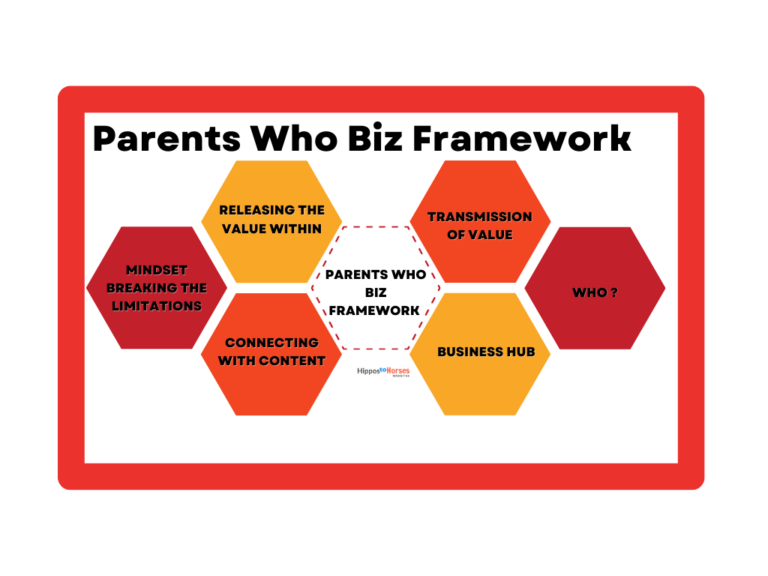
While Seth Godin’s ideas focus on how things spread, the Parents Who Biz framework focuses on how things are built specifically for people balancing business with family life.
Traditional business advice often assumes unlimited time, predictable schedules, and uninterrupted focus. That is not reality for parents.
The Parents Who Biz framework is designed around that reality. It emphasises:
Clarity over complexity
You do not need a complicated business model. You need a clear problem, a clear audience, and a clear solution.
You do not need a complicated business model. You need a clear problem, a clear audience, and a clear solution.
Alignment over hustle
Instead of forcing growth through constant output, the framework encourages building something that fits your life, values, and capacity.
Instead of forcing growth through constant output, the framework encourages building something that fits your life, values, and capacity.
Consistency over intensity
Small, repeatable actions matter more than occasional bursts of effort. This is essential when your time is divided.
Small, repeatable actions matter more than occasional bursts of effort. This is essential when your time is divided.
Practical structure
The framework provides a way to move from idea to offer without overwhelm, helping parents make progress even in limited time windows.
The framework provides a way to move from idea to offer without overwhelm, helping parents make progress even in limited time windows.
In short, it is a creation system. It helps you build something real, something useful, and something sustainable. The main takeaway: use this system to create consistent progress, especially when you have limited time.
But like any creation system, it does not automatically solve the visibility problem.
The Missing Link: Why You Need Both Creation and Distribution
Here is the core insight: building the business and spreading the word are two distinct functions, both essential.
You can have:
- A great offer that nobody sees
- A strong message that never reaches the right people
- A meaningful business that stays small simply because it is invisible
Or the opposite:
- High visibility with no depth
- Attention without trust
- Growth that is not sustainable
Neither works on its own.
For entrepreneurial parents, this balance is critical. You cannot afford to waste time on either side.
If you lean too far into building, you stay hidden.
If you lean too far into marketing, you risk burnout and disconnection.
If you lean too far into marketing, you risk burnout and disconnection.
The goal is not to do more. It is to connect the two so that what you build naturally supports how it spreads. Key takeaway: integrate creation and distribution to ensure your efforts lead to a visible impact.

The Missing Link: Why You Need Both Creation and Distribution
Here is the core insight: building the business and spreading the word are two distinct functions, both essential.
You can have:
- A great offer that nobody sees
- A strong message that never reaches the right people
- A meaningful business that stays small simply because it is invisible
Or the opposite:
- High visibility with no depth
- Attention without trust
- Growth that is not sustainable
Neither works on its own.
For entrepreneurial parents, this balance is critical. You cannot afford to waste time on either side.
If you lean too far into building, you stay hidden.
If you lean too far into marketing, you risk burnout and disconnection.
If you lean too far into marketing, you risk burnout and disconnection.
The goal is not to do more. It is to connect the two so that what you build naturally supports how it spreads. Key takeaway: integrate creation and distribution to ensure your efforts lead to a visible impact.
From Value to Visibility: Connecting the Two Frameworks in Practice
This is where the real shift happens when you begin to integrate the Parents Who Biz framework with Seth Godin’s principles.
Here is how they align in practice:
1. Start with empathy (Seth) through clarity (Parents Who Biz)
Your business begins with understanding your audience. The framework helps you define the problem clearly, while Seth’s lens ensures you feel it from the audience’s perspective.
Your business begins with understanding your audience. The framework helps you define the problem clearly, while Seth’s lens ensures you feel it from the audience’s perspective.
Instead of asking, “What can I sell?”
You ask, “What does this person need right now?”
You ask, “What does this person need right now?”
2. Build for a specific tribe, not everyone
The Parents Who Biz framework encourages focus. Seth reinforces that you do not need mass appeal.
The Parents Who Biz framework encourages focus. Seth reinforces that you do not need mass appeal.
When you speak to a specific group of entrepreneurial parents navigating time constraints, identity shifts, and pressure, you create resonance. That is what leads to connection.
3. Create something worth talking about
Consistency and alignment lead to quality. When your offer genuinely helps people, it becomes shareable.
Consistency and alignment lead to quality. When your offer genuinely helps people, it becomes shareable.
Word of mouth is not a tactic; it is an outcome of meaningful work.
4. Earn permission through consistency
You do not need to post everywhere, all the time. You need to show up regularly, with value.
You do not need to post everywhere, all the time. You need to show up regularly, with value.
Whether it is a weekly insight, a short reflection, or a practical tip, each interaction builds trust. Over time, people choose to keep listening.
5. Make your message simple and human
Parents are busy. Your audience does not have time to decode complex messaging.
Parents are busy. Your audience does not have time to decode complex messaging.
Clarity in your offer (from the framework) combined with empathy in your communication (from Seth) makes your message easy to understand and easy to share.
This balance, a valuable offer shared clearly, turns value into visibility.
Not through hacks or shortcuts, but through alignment between what you build and how you communicate it.

What This Means for Entrepreneurial Parents in the Real World
In reality, entrepreneurial parents are navigating constraints that most business advice ignores.
According to insights shared by Seth Godin, many entrepreneurs, especially parents, often find themselves juggling school routines, emotional demands, and limited time or energy, which forces them to make important decisions in short bursts throughout the day.
This approach respects that.
It does not ask you to:
- Be everywhere
- Do everything
- Grow at all costs
Instead, it asks you to:
Build something that matters.
Using a framework that fits your life, you create a business that is realistic and aligned.
Using a framework that fits your life, you create a business that is realistic and aligned.
Share it in a human way.
Using Seth Godin’s principles, you connect with people rather than trying to capture attention.
Using Seth Godin’s principles, you connect with people rather than trying to capture attention.
Focus on the right people.
Not everyone needs what you offer. The goal is to reach those who do.
Not everyone needs what you offer. The goal is to reach those who do.
Progress sustainably
Growth does not need to be fast to be meaningful. It has to be consistent and intentional.
Growth does not need to be fast to be meaningful. It has to be consistent and intentional.
Over time, this creates a different kind of business.
One that grows through trust, not pressure.
One that spreads through connection, not noise.
One that fits into your life rather than competing with it.
One that spreads through connection, not noise.
One that fits into your life rather than competing with it.
For entrepreneurial parents, balancing building and sharing is essential.

Final Thoughts: Build the Business, Then Help the Right People Find It
For entrepreneurial parents, building a business and getting the word out are not the same task, but both matter. One helps you create something valuable, sustainable, and aligned with your life; the other helps that value reach the people who truly need it. When you combine the practical structure of Parents Who Biz with a more human approach to marketing, you stop chasing noise and start building trust. That is where real momentum begins. If you are ready to build a business that fits family life and learn how to share it with the right people, sign up for the course here.